Encinitas, CA

Garage Door Maintenance in Encinitas

Most Encinitas garage doors were installed between 1970 and 2003. Here's why that age range is the reason springs, rollers, and openers start failing now.

Garage Door Maintenance in Encinitas in Encinitas
Serving Encinitas, CABackground-checked techsHonest, upfront pricingFast local response
1970–2003
Typical build years of local homes
1983
Median year homes were built
11K
Owner-occupied homes in the area

Local causes

Why This Fails Locally

Housing across this part of the county went up mostly between 1970 and 2003, with the median build year sitting around 1983. That means a huge share of the doors on the streets around Cardiff, Leucadia, and the neighborhoods stretching toward Carmel Valley and Del Mar Heights are running original or first-replacement hardware that's now 20 to 50 years old. Springs, rollers, and cable are wear items with a life measured in cycles, not years, but a door installed in 1983 has put in a lot of cycles by now.

The climate here is mild temperate, which cuts both ways. There's no hard freeze-thaw cycle to crack seals or seize hardware overnight, so a lot of owners assume the door will just keep going with no attention. It won't. Slow, steady wear - dried-out lubricant, a roller that's worn oval instead of round, a spring losing tension a little at a time - doesn't announce itself the way a winter failure does elsewhere. It just gets a little worse every month until the day it doesn't open at all.

Across the roughly 10,803 owner-occupied houses in this service area, the pattern repeats: doors from the 1980s and 90s stock are aging out of their original hardware right now, on a mild schedule that hides the problem until it isn't hidden anymore.

Why This Fails Locally

Symptoms

The Symptom

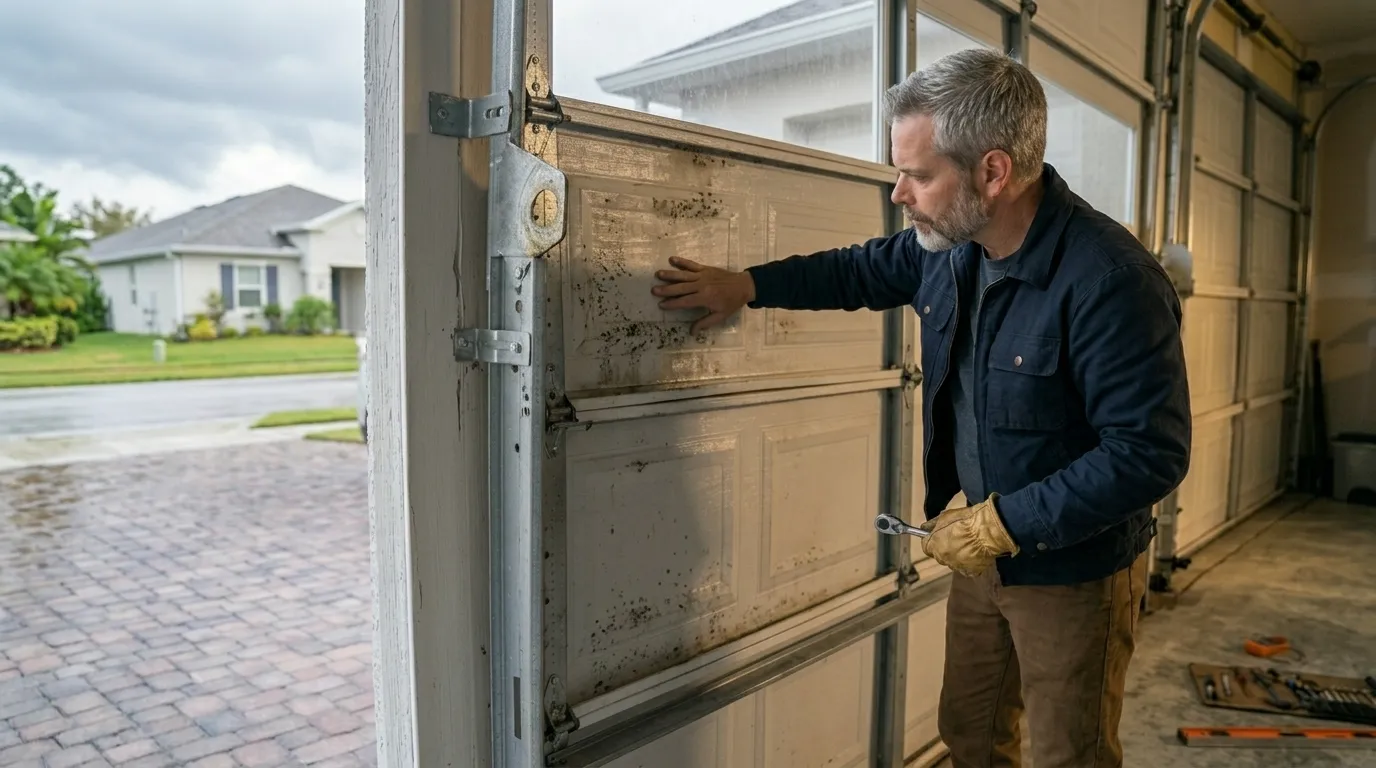
The tell is usually noise before it's a full stop. A door that used to run quiet starts grinding, popping, or hesitating partway up the track.

Quiet door degradation progression

Sometimes it's a slow sag on one side - a sign a cable or roller on that side is more worn than the other. Sometimes the opener strains audibly and takes an extra second before the door moves at all, which usually means the spring is doing less of the lifting than it used to and the motor is picking up the slack.

Mild climate slow-wearing advantage

None of this is dramatic at first. That's the trap. A door built in the early 1980s with original torsion hardware doesn't fail all at once - it degrades a little at a time over years, and because the weather here doesn't force sudden failures, owners get used to the noise and stop noticing it.

Early-warning spring fraying

Then one morning the spring snaps or a cable frays through, and the door that was merely loud yesterday won't move at all today. If you're hearing new noise, feeling the door catch or jerk anywhere in its travel, or noticing the opener working harder than it used to, that's the maintenance window. Waiting past it usually turns a $ maintenance visit into a repair call.

Timing

How Long It Takes

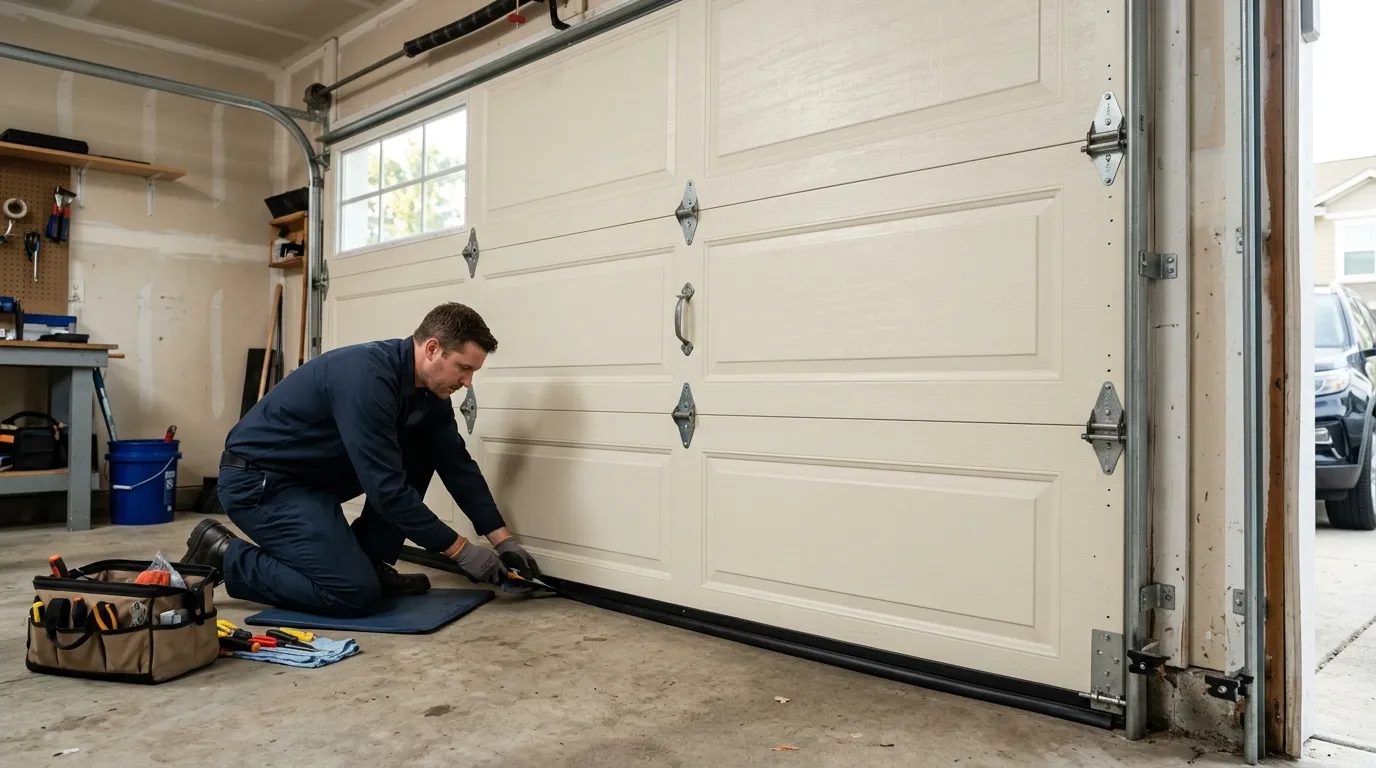
A standard maintenance visit - lubrication, hardware inspection, spring tension check, track alignment, roller and cable condition check - takes under an hour on most single or double doors.

Maintenance interval routine scheduling

It's not a project. It's closer to the interval service you'd do on a car: quick, routine, and cheap compared to what it prevents. What takes longer is catching problems early enough that maintenance is still the right call instead of repair or replacement.

Spring visibly-stretched repair transition

On a door from the 1970-2003 build era, once a spring is visibly stretched, a cable strand has started to fray, or a roller has worn down to metal-on-metal, you're past maintenance territory - that's a repair visit, and it takes longer and costs more. We won't stretch a routine visit into something it isn't.

Cheapest prevention hour example

If your door needs parts, we'll say so and quote that separately rather than padding a maintenance call. The honest version of this: regular maintenance on a door in this age range, done on a schedule, is the cheapest hour you'll spend on the house all year. Skipped for a decade, it isn't.

DIY or pro

Doing It Yourself

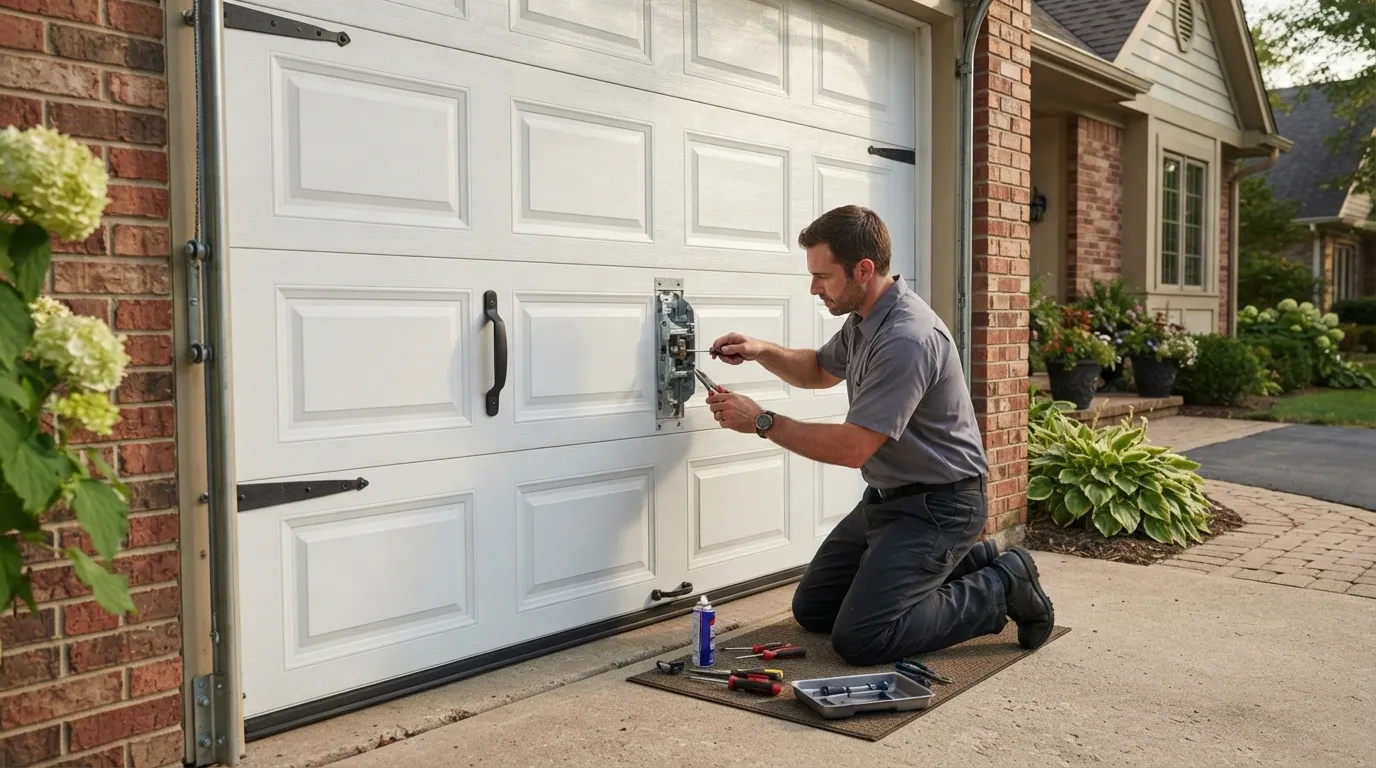
Some of this you can do yourself. Wiping down and lubricating the rollers, hinges, and track with a garage-door-specific lubricant (not household oil, which attracts grit) is fair game for most owners, and doing it twice a year on a door from this era makes a real difference.

Photo-eye sensor alignment DIY

Checking that the door reverses when it hits an obstruction, and that the photo-eye sensors near the floor aren't knocked out of alignment, is also worth doing yourself - it takes five minutes. What you shouldn't touch is the torsion spring.

Torsion spring ER injury

It's under enough tension to cause a serious injury if it lets go while you're working near it, and on a door built decades ago the spring is old enough that nobody can guarantee how much life is left in it.

Professional-only spring handling

That's a call-a-professional job, full stop, and it's the one honest limit we'll put on the DIY advice here: lubricate, inspect, test the safety reverse - but leave the spring and cable work to someone doing it with the right bar and enough clearance to walk away if it goes wrong.

Questions

Common questions

How often should I get my garage door serviced in Encinitas?

Twice a year is a reasonable baseline for most doors in this area, especially on houses built in the 1970-2003 range where hardware is aging out. If your door is making new noise or the opener is straining, don't wait for the scheduled visit - that's a sign something's already past routine wear.

Why does my door need maintenance if the weather here is mild?

Mild temperate weather doesn't cause sudden failures the way a hard freeze can, but it also doesn't stop gradual wear - dried lubricant, worn rollers, a spring slowly losing tension. Without that dramatic weather trigger, owners tend to skip maintenance until the door fails outright, which is usually the more expensive path.

Is maintenance worth it on an older door, or should I just replace it?

Depends what's worn. If it's lubrication, alignment, and minor hardware wear, maintenance extends the door's life for cheap. If the spring, cable, or opener is failing on a door that's decades old, we'll tell you honestly when repair or replacement makes more sense than another maintenance visit.

Ready when you are

Need a garage door sorted in Encinitas?

Encinitas Garage Door Pros repairs and installs garage doors, springs and openers in Encinitas, CA and the surrounding area.

Call Now(442) 206-8968