
Guide
Why So Many Encinitas Garage Doors Have No Insulation at All
Most Encinitas homes went up between 1970 and 2003, median 1983, with uninsulated steel doors built for a mild coastal climate. Here's what that means for repair.
Local detail
What the Weather Here Does to It
Encinitas sits in a mild temperate band, and that's the reason a lot of original garage doors here have lasted as long as they have without falling apart. There's no hard freeze cracking seals, no summer heat wave warping panels the way it does further inland. But mild doesn't mean dry.
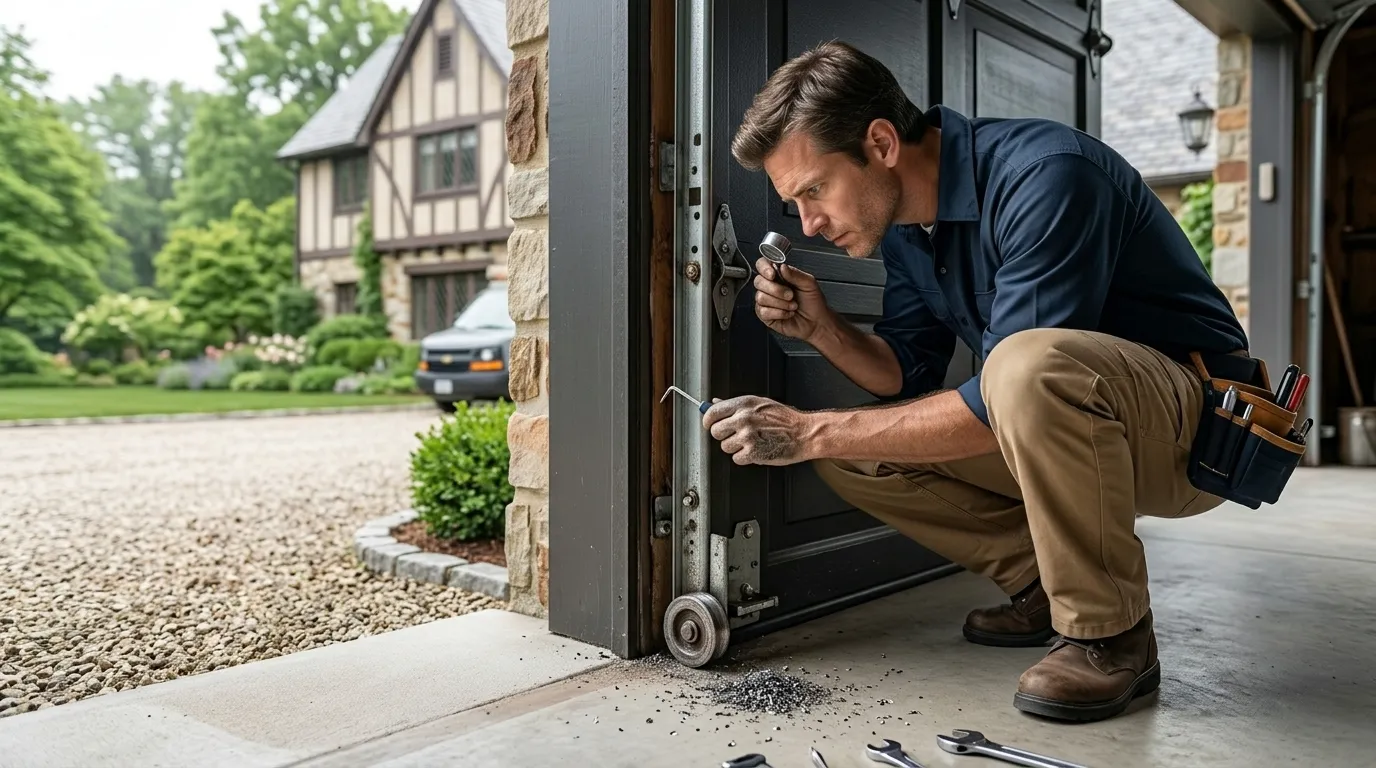
The marine air off the coast keeps a steady low-grade moisture in play year-round, and that's what actually works on the hardware in a door that was never built to manage it. A single layer of steel with no thermal break does fine holding shape in this climate. What it doesn't do well is stop condensation from forming on the inside face, which over enough seasons turns the bottom bracket and roller pins into the parts that seize or rust through quietly, long before the panel itself looks bad.
Most owners here don't get a dramatic failure. They get a door that's gotten stiff, and they assume it's the opener when it's really the track hardware.
The area
The Problem
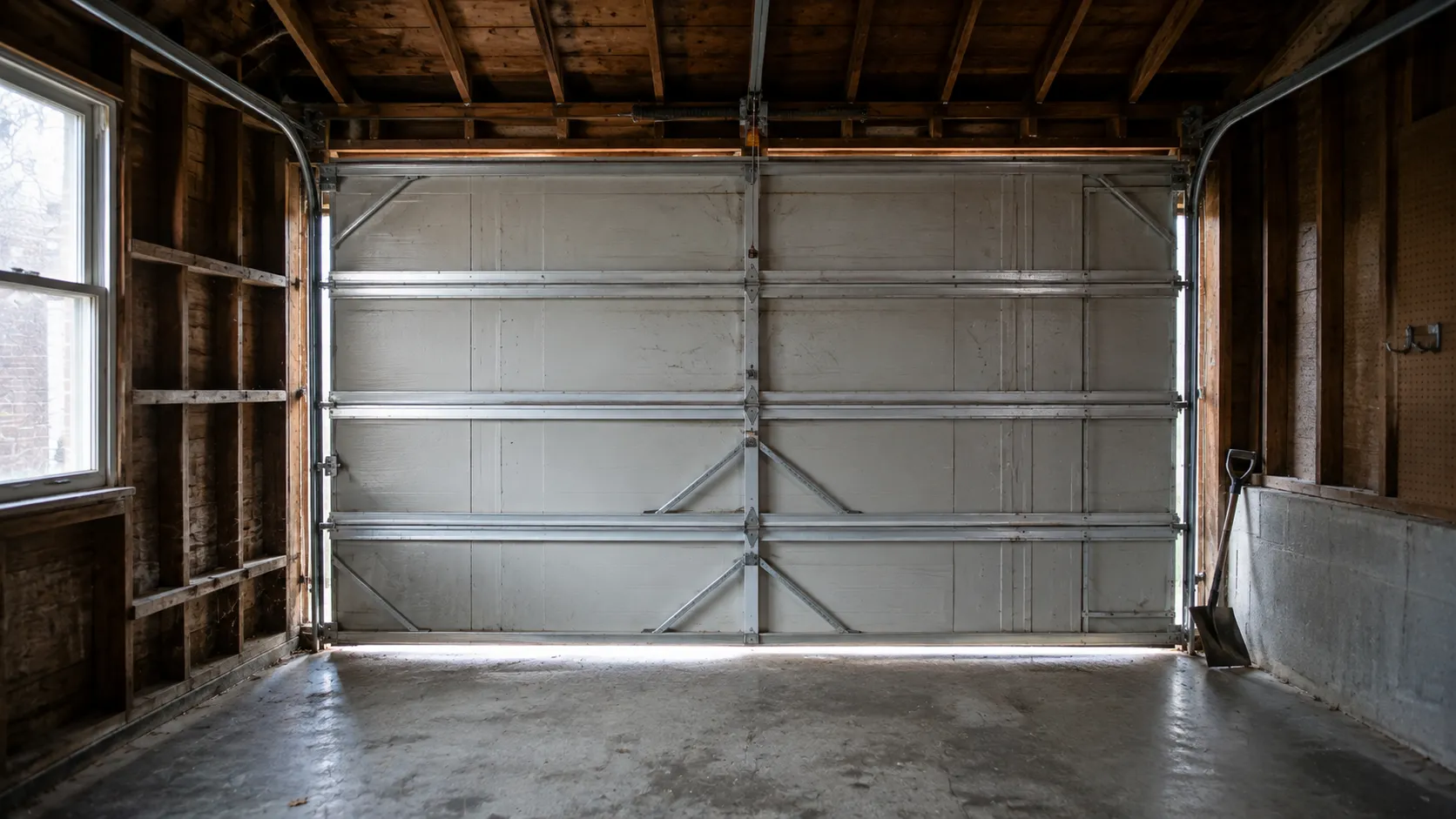
The service area's housing stock is mostly 1970 to 2003, with a median build year of 1983, and that stretch matters because garage door insulation wasn't standard practice on tract construction back then. A door installed on a house built in the early 80s is almost always a single skin of steel or aluminum with nothing behind it - no foam core, no vapor barrier, no thermal seal between panels. Across the nine named pockets that make up most of the mid-80s to mid-90s stock in this service area, that's the door you're going to find on the original garage, whether it's been repainted or not.
It's not a defect. It's just what the building code and the market called for at the time. The problem shows up now because uninsulated steel doors flex more than insulated ones - they oil-can in the middle, the seams work loose at the hinges faster, and on a double-wide door that flex puts more strain on the torsion spring than the same door would see if it had a foam core stiffening the panel.
What we find
The Seasonal Bit
Because the climate here doesn't swing hard, you don't get the freeze-thaw cycle that snaps springs in one cold snap the way it does in harsher regions. What you get instead is slower and easier to miss. An uninsulated door built during the 1970-2003 run has had two or three decades of that mild, damp coastal air working on exposed hardware with no insulation layer to slow moisture transfer.
The failure pattern is gradual: a roller that's been quietly rusting on its shaft, a spring coating that's worn thin from repeated small temperature swings rather than one big one. There isn't really a bad season for it, which is part of the problem - nobody's watching for it in March the way they would before a big storm. The honest answer is that these doors don't usually fail all at once.
They get noisy, then stiff, then someone finally calls when the opener starts straining. Catching it at noisy is cheaper than catching it at stopped.
How we work
The Cost of This Job
We don't have a flat number to hand you here - what it costs depends on whether you're replacing a rusted roller and a bracket, or dealing with a spring that's finally given out on an uninsulated double door where the extra flex has been putting more load on the coil than an insulated panel would. Median household income across this service area runs around $119,394, and swapping an original uninsulated door for a modern insulated one is a bigger job than a repair, not a like-for-like part swap - the frame and weatherstripping usually need attention too. Where we're honest with people: if the door is original to a house built in the 1980s and it's the panel itself that's failed, not just the hardware, a repair patch is a short-term fix at best.
Steel that thin doesn't take a second life well. Fixing the spring or roller on that same door is usually worth it. Replacing a warped uninsulated panel to match a door that's forty years old is not.
Questions
Common questions
Why doesn't my garage door have any insulation?
If your house was built anywhere in the 1970-2003 range that covers most of this service area - median year 1983 - insulated garage doors just weren't standard on tract homes. You've got a single skin of steel or aluminum. That's normal for the era, not something broken.
Does Encinitas' climate cause garage door problems?
The mild temperate climate here is easier on doors than a region with hard freezes, but the steady coastal moisture still gets into exposed hardware on uninsulated doors over time. It shows up as slow rust on rollers and brackets rather than sudden failure.
Should I replace my original 1980s door or just fix it?
Depends what's failed. If it's a spring, roller, or bracket, repair is usually the right call even on an old uninsulated door. If the steel panel itself is warped or rusted through, a patch won't hold long - replacement is the more honest answer at that point.
Ready when you are
Need a garage door sorted in Encinitas?
Encinitas Garage Door Pros repairs and installs garage doors, springs and openers in Encinitas, CA and the surrounding area.